
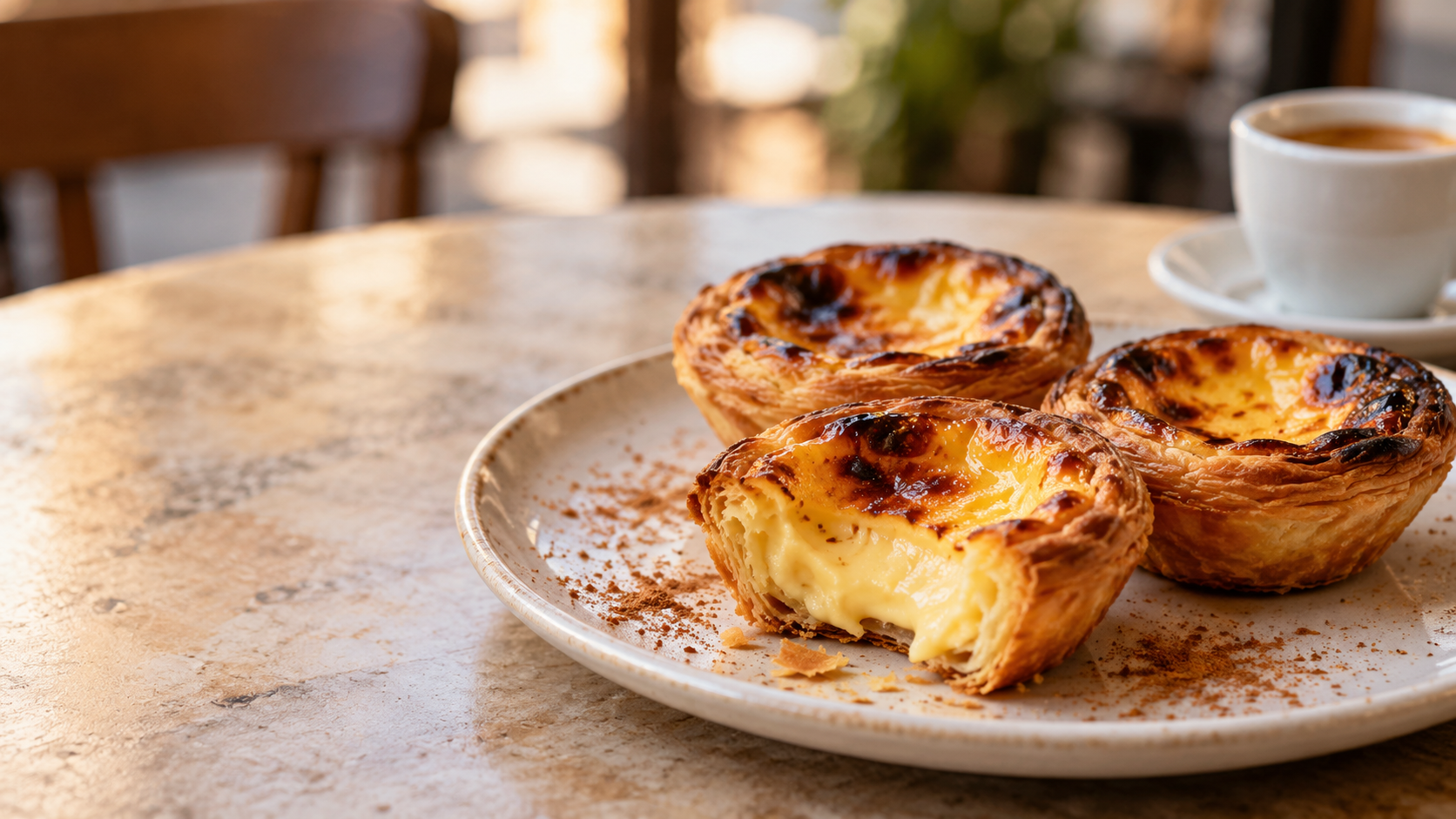
If you’re searching for the best “postre de natas near me,” you’re likely looking for a pastel de nata: Portugal’s small custard tart, made with crisp pastry and a creamy egg filling. The best nearby option is usually a bakery that bakes them fresh and serves them warm, when the pastry is crisp and the custard is soft. Since “near me” depends on your location, this guide explains what to look for rather than naming a shop.
| At a Glance | Details |
|---|---|
| Dessert | Pastel de nata, a Portuguese custard tart |
| Pastry | Layered puff pastry |
| Filling | Milk, egg yolks, egg, flour and sugar syrup |
| Traditional flavorings | Cinnamon and lemon peel |
| How it’s baked | At high heat until the pastry is golden and the custard caramelizes |
The recipe published by Portugal’s official tourism site includes these pastry and custard ingredients and calls for baking at high heat.
What to look for in the best postre de natas near you
A good pastel de nata balances crisp, flaky pastry with a smooth custard center. The top should be browned in places from baking, while the filling remains creamy rather than watery or rubbery. The precise appearance can vary from bakery to bakery, so look for freshness and texture as well as color.
Freshness matters because the pastry shell can lose its crispness as it sits. If you can, choose a bakery that bakes in batches or ask when the next batch will be ready. A warm tart is often enjoyable on its own; cinnamon is a traditional optional topping, not a requirement.
The name may appear in different forms on menus and listings: pastel de nata for one tart, pastéis de nata for more than one, or “Portuguese custard tart” in English. Searching with these alternatives can help you find bakeries that don’t use the phrase “postre de natas.”
How to choose a nearby bakery
Start with a map or local business search using “pastel de nata,” “pastéis de nata,” and “Portuguese custard tart.” Check the bakery’s current menu and opening hours, then look for recent photos or reviews that mention the tart specifically. A high overall rating alone may tell you little about the pastry you want.
Recent, detailed comments are more helpful than vague praise. Look for observations about whether the tart was served warm, whether the crust stayed crisp, and whether the custard tasted freshly baked. If the listing is unclear, call ahead to ask whether the tarts are made on site and when they usually come out of the oven.
You can also widen your search to include Portuguese cafés, bakeries and restaurants. Some make pastéis de nata throughout the day; others may offer them only at certain times or sell out. Confirm availability before making a special trip.
Questions worth asking before you go
A quick call can settle the practical details:
- Are pastéis de nata available today?
- Are they baked on site?
- When is the next batch expected?
- Can they be ordered for takeaway or in a larger quantity?
If you have a dietary restriction, ask about ingredients directly. A traditional custard tart contains wheat and dairy, and its filling includes eggs. Recipes differ, so check with the bakery rather than assuming a variation is suitable.
Pastel de nata and pastel de Belém: what’s the difference?
The names are related, but they aren’t interchangeable in every context. Pastel de nata is the general name for the Portuguese custard tart. Pastéis de Belém refers to the pastry associated with a specific bakery in Lisbon’s Belém district. The bakery’s own history says it began baking and selling these pastries in 1837, following a recipe it describes as secret.
So, a café near you can serve a pastel de nata without calling it a pastel de Belém. If a local business uses the Belém name, check how it describes the product rather than assuming it comes from the Lisbon bakery.
How to enjoy one
Try the tart first without toppings to notice the contrast between the pastry and custard. If cinnamon is available, add a light dusting; its warm spice complements the sweet filling. In Portugal, a pastel de nata is often paired with coffee, including espresso.
For takeaway, ask whether the bakery recommends eating the tart warm or reheating it at home. Reheating instructions depend on the bakery’s pastry and packaging, so follow its guidance. If you’re buying several, keep them protected from being crushed and avoid sealing warm tarts in a way that traps steam against the crust.
Frequently Asked Questions
Is “postre de natas” the same as pastel de nata?
In this search, it most likely refers to a pastel de nata, the Portuguese egg custard tart. Use that name or “Portuguese custard tart” when searching local menus and listings.
What should a fresh pastel de nata taste and feel like?
Look for a crisp, flaky shell and a smooth, creamy custard. The top is typically browned during baking, though the amount of caramelization varies by bakery.
Should I eat a pastel de nata warm?
Many people enjoy it warm, when the contrast between crisp pastry and soft filling is especially appealing. Ask the bakery whether it has just been baked or is best reheated.
Do all Portuguese custard tarts come from Belém?
No. Pastel de nata is the general pastry name. Pastéis de Belém refers to the product associated with the bakery in Lisbon’s Belém district.
Conclusion
To find the best postre de natas near you, search for pastéis de nata, check recent pastry-specific reviews, and confirm that the bakery has them available fresh. A crisp shell, creamy custard and warm serving are useful signs of a satisfying tart.
Read also What Is Fapelli? A Clear Look at the Website and Its Claims