
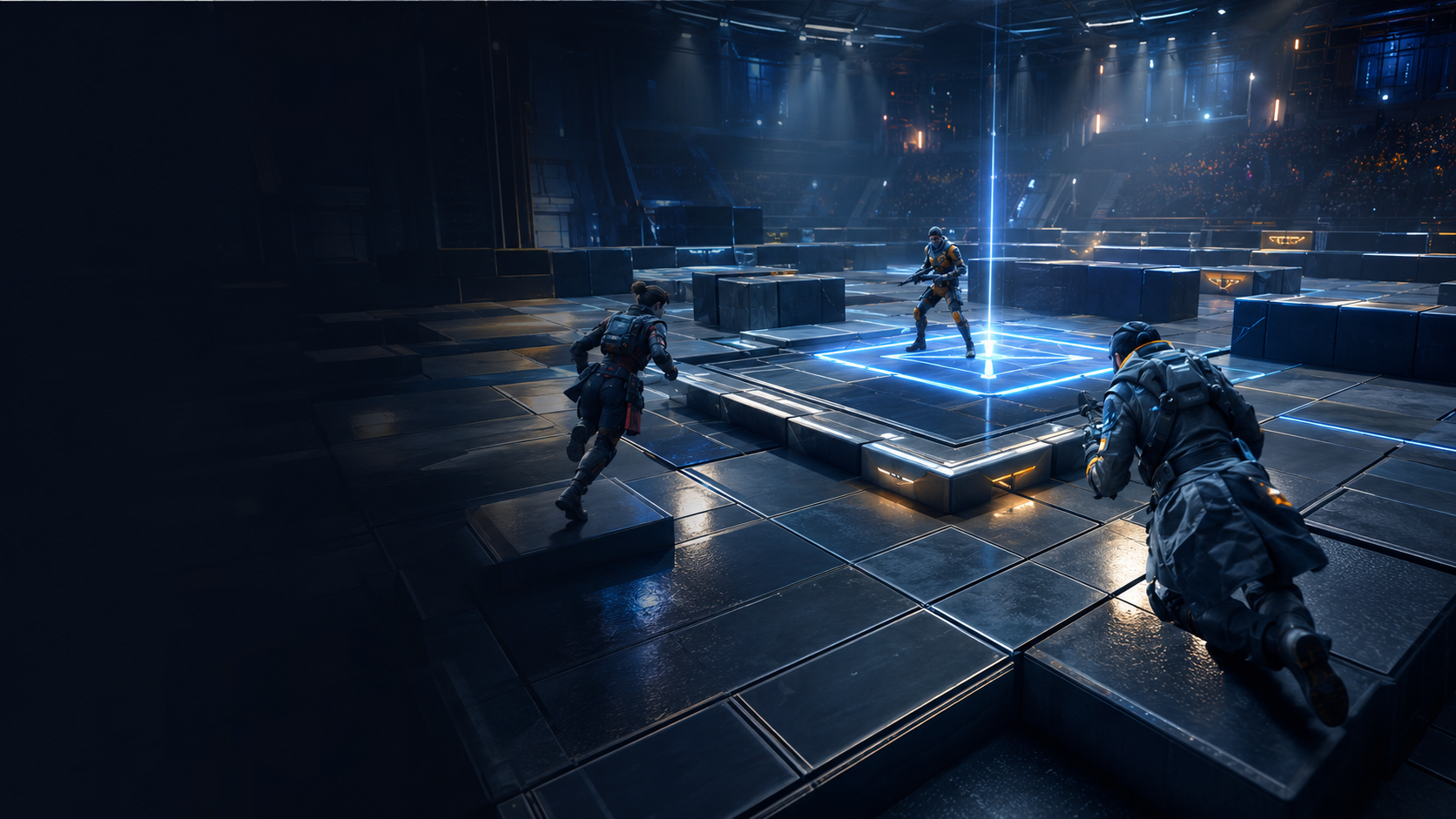
The phrase “in videogames PlayBattleSquare” usually refers to a compact style of arena gameplay built around square spaces, fast movement, territorial control, and short competitive encounters. Players must do more than defeat opponents. They also need to read the map, control important positions, and make good decisions under pressure.
The term can be confusing because it is used differently across similarly named gaming websites. Some pages describe PlayBattleSquare as an online gaming platform, while others present it as an arena-style game mode. It is therefore best understood as a broad gaming concept rather than a formally recognised video game genre.
This guide explains what the phrase means, how the gameplay works, which strategies matter, and what players should check before joining an unfamiliar gaming platform.
What PlayBattleSquare Means
PlayBattleSquare’s own gaming coverage describes the concept as a multiplayer arena format played across a compact grid or collection of square platforms. Depending on the version, players may capture tiles, defend positions, collect power-ups, eliminate rivals, or score points by holding sections of the map.
The square layout is more than a visual choice. It divides the arena into readable spaces, making it easier to understand which areas are safe, exposed, contested, or valuable.
This structure creates a simple strategic question: Which square should you control next? The answer changes constantly as opponents move, objectives reset, and resources appear.
A Useful Distinction
PlayBattleSquare should not automatically be confused with Battle Squares, a separate commercial video game available on Steam.
According to its official Steam listing, Battle Squares is an online 2D shooter developed by Feesh Studio and released in November 2024. It features eight-directional movement, weapon combinations, customisable square characters, and arena combat.
By comparison, PlayBattleSquare is used more loosely in online gaming content. The PlayBattleSquare website describes it as a tactical mode based on grid movement, tile control, positioning, and short-term decisions.
Remembering this difference helps players avoid downloading or visiting the wrong product.
The Core Loop
Most PlayBattleSquare-style matches can be understood through three actions: capture, defend, and disrupt.
Players first capture an open tile or objective. They then protect it long enough to earn points or another advantage. At the same time, the opposing team tries to interrupt that control and take the position back.
This loop keeps matches moving. A player who remains in one location for too long can become predictable, while someone who moves constantly without protecting objectives may contribute little to the score.
Strong players learn when to hold their ground and when to rotate toward another square.
Map Control
Map control is the foundation of this type of gameplay. The most useful square is not always the one in the middle. A side position with cover, a clear escape route, and access to a power-up may be more valuable.
Before entering a fight, look at the surrounding spaces. Consider where an opponent might retreat, which routes teammates can use, and whether the position exposes you to attacks from several directions.
The goal is to control useful space, not simply occupy as many tiles as possible. A small number of connected positions can be more powerful than several isolated squares that are difficult to defend.
Movement
Fast arena games reward purposeful movement. Running directly towards every opponent usually makes a player easy to predict.
Use short directional changes, cover, jumps, dashes, or other available movement abilities to make your route less obvious. When crossing an exposed square, decide where you will move next before leaving cover.
Good movement also includes knowing when to stop. Holding a strong angle for a few seconds can be more effective than chasing an opponent into an unfamiliar part of the map.
Whenever possible, keep an escape route available. A position becomes dangerous when the only way out is through the opposing team.
Positioning
Positioning determines how much information and control a player has during a match.
A strong position normally offers at least two of the following advantages:
- A clear view of an objective
- Nearby cover
- More than one exit
- Access to a useful resource
- Support from a teammate
- Protection from long-range attacks
High ground can improve visibility, but it should not be treated as an automatic victory. Some elevated squares are easy to surround or offer limited cover.
The best position is the one that supports the current objective without leaving the player trapped.
Combat
Accurate shooting matters, but decision-making often matters more. Entering a fight with low health, limited ammunition, or no escape route places even a mechanically skilled player at a disadvantage.
Try to begin engagements on favourable terms. Let an opponent cross an exposed tile, attack while a teammate creates pressure, or wait until the enemy has used an important ability.
Avoid treating every encounter as a duel that must be finished. Sometimes damaging an opponent and forcing them away from an objective produces more value than chasing the elimination.
In team modes, focus fire is particularly effective. Two players attacking the same target can end a fight quickly and create a temporary numbers advantage.
Resources
Health packs, ammunition, shields, temporary boosts, and special weapons can shape the direction of a match. Their value comes not only from collecting them but also from preventing opponents from using them.
Pay attention to where important resources appear and how long they take to return. Experienced players often plan their movement around these timings.
Do not abandon a winning position for a low-value item. A power-up is useful only when the journey to collect it does not cost the team a more important objective.
When a resource is about to appear, approach the area early. Arriving first allows you to choose cover and prepare for opponents who are likely to follow.
Team Play
Communication should be short and useful. Tell teammates where an opponent is, which tile is being captured, or when an important ability has been used.
Lengthy explanations during a fight create noise. Simple calls such as “two on centre”, “left tile open”, or “power-up soon” give teammates information they can act on immediately.
Teams also benefit from defined responsibilities. One player may defend an objective, another may watch connecting routes, and a more mobile teammate may collect resources or apply pressure.
These roles should remain flexible. If the defender is eliminated, another player must recognise the gap and respond rather than continuing with the original plan.
Beginner Plan
New players should spend their first matches learning the arena rather than worrying about their ranking.
Start by identifying the main objectives, spawn locations, cover points, and resource areas. Follow experienced teammates and observe which routes they use between squares.
Next, focus on surviving fights. Practise moving between cover, disengaging at low health, and checking exposed angles before entering a new area.
Once movement feels natural, begin studying objective timing and opponent behaviour. You will start noticing repeated patterns, such as players rushing the centre at the beginning of every round.
Improvement is easier when you work on one skill at a time. A useful order is movement, positioning, awareness, objective control, and then advanced combat techniques.
Better Decisions
Consistent players collect information before committing to an action.
Look at the score, remaining time, teammate positions, available resources, and likely enemy routes. These details reveal whether the team should attack, defend, or avoid unnecessary fights.
For example, a team that already leads near the end of a timed round may not need to chase opponents. Holding protected tiles can be the safer decision.
After each defeat, ask one practical question: What information did I miss? Perhaps an escape route was blocked, an opponent held high ground, or a power-up appeared earlier than expected.
This type of review is more useful than blaming reaction speed alone.
Common Mistakes
The first common mistake is chasing eliminations away from the objective. A player may win a duel but still lose the position that generates points.
Another mistake is repeatedly using the same route. Predictable movement allows opponents to prepare an ambush or control the most obvious entrance.
Players also struggle when they collect resources without considering timing. Taking a health pack while already near full health may leave it unavailable when a teammate genuinely needs it.
Ignoring the score is equally costly. The correct strategy changes according to the win condition. Elimination rules reward survival, while timed objective modes often reward steady control.
Finally, some players continue fighting after the situation is clearly lost. Retreating, recovering, and regrouping can prevent one defeat from turning into several.
Fair Design
A well-designed square arena provides pressure without removing player choice. Each valuable position should have a counter, and every strong route should carry some risk.
Spawn locations need protection from immediate attacks. Sightlines should support both close-range and long-range play without allowing one weapon type to dominate the entire map.
Clear visual and audio feedback also matters. Players should be able to recognise controlled tiles, active hazards, incoming attacks, and changing objectives without studying a complicated interface.
Fair progression rewards commitment without selling an overwhelming competitive advantage. Cosmetic items, rankings, and optional challenges can provide motivation while keeping the outcome dependent on skill and teamwork.
Frequent playtesting is essential. Designers can watch for positions that are too difficult to challenge, matches that become repetitive, and resources that give one side a lasting advantage.
Safe Play
Before registering on any gaming website, confirm the correct domain and review its privacy policy, payment terms, age requirements, and support information. Avoid entering financial details on a page that does not clearly explain who operates it or how transactions are handled.
Use a long, unique password and enable multifactor authentication when available. The US Cybersecurity and Infrastructure Security Agency recommends unique passwords and MFA because an additional verification step can help protect an account even if its password is exposed. See CISA’s account-security guidance.
Never share passwords, verification codes, home addresses, or payment information through in-game chat. Treat unexpected links, free-item offers, and requests to move a conversation to another service with caution.
Parents can use device-level controls to restrict purchases, communication, play time, and age-inappropriate content. The ESRB parental-control guide explains the options available across consoles, computers, and mobile devices.
Healthy play also requires balance. The World Health Organization notes that gaming disorder affects only a small proportion of players, but recommends paying attention when gaming begins to replace normal daily activities or affects physical, psychological, or social well-being.
Final Thoughts
In videogames PlayBattleSquare is best understood as a compact competitive format centred on movement, tile control, positioning, and fast decisions. Its straightforward layout can make it approachable, but the interaction between objectives, resources, routes, and opponents creates genuine strategic depth.
The most reliable way to improve is to play with a clear purpose. Learn the arena, control connected spaces, communicate useful information, and avoid fights that do not support the objective.
Because the PlayBattleSquare name is used in different ways online, always confirm whether a page refers to a game, a mode, a blog, or a broader platform. That small check can prevent confusion and help you find the experience you actually want.
FAQs
What does “in videogames PlayBattleSquare” mean?
It generally refers to a compact arena-style gaming concept involving square spaces, fast matches, map control, objectives, and competitive player movement. The wording is not a standard industry genre, so its meaning can vary between websites.
Is PlayBattleSquare a video game?
The name is used inconsistently. Some sources describe it as a gaming platform, while PlayBattleSquare’s own articles also use it for a grid-based arena mode. Check the specific page and publisher before assuming it is a standalone downloadable game.
Is PlayBattleSquare the same as Battle Squares?
No. Battle Squares is a separate online 2D shooter developed by Feesh Studio and listed on Steam. PlayBattleSquare is a broader name used by gaming websites and articles.
How does PlayBattleSquare gameplay work?
Typical gameplay revolves around capturing and defending tiles, disrupting opponents, collecting resources, and earning points. Exact rules depend on the game or version being discussed.
What is the best PlayBattleSquare strategy?
Control connected positions, stay close to cover, track important resources, and fight when doing so supports the objective. In team modes, clear communication and coordinated attacks are more reliable than individual chasing.
Is PlayBattleSquare suitable for beginners?
The basic idea is beginner-friendly because square maps and visible objectives are easy to understand. However, positioning, resource timing, and team coordination can provide a higher skill ceiling for experienced players.
Can PlayBattleSquare be played on mobile?
Device support depends on the specific website or game. Check its official compatibility information before registering, downloading software, or making a purchase.
Is PlayBattleSquare safe?
Safety depends on the exact website or product. Verify the domain, read its privacy and payment policies, use a unique password, enable MFA when possible, and avoid sharing personal information with other players.
How can I improve quickly?
Learn one map at a time, use different routes, review why you lose objectives, and practise retreating from unfavourable fights. Improving awareness and positioning usually produces more consistent results than focusing only on aim.
Why are square arenas effective in video games?
Square spaces create clear boundaries, predictable routes, and readable objectives. Designers can use them to produce frequent encounters while still allowing tactical choices involving cover, distance, and movement.