
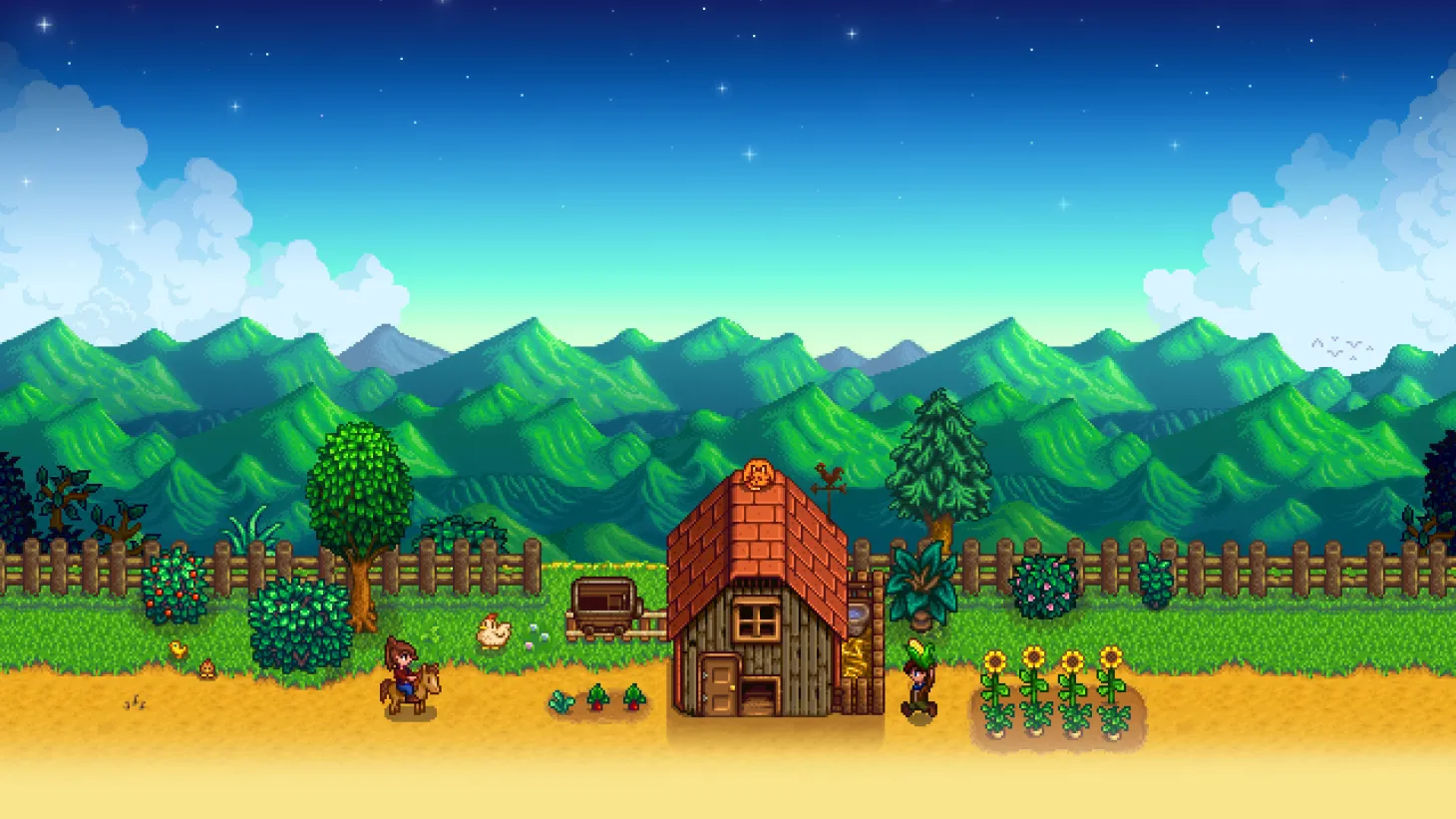
Stardew Valley has been available for almost a decade, yet it continues to attract new players and bring older fans back to Pelican Town. Its appeal does not depend on a single dramatic story or a constantly changing online world. Instead, it comes from small routines that gradually become personal.
The game arrived in 2016 as a farming and life simulation created by Eric Barone, also known as ConcernedApe. Since then, it has expanded through major updates, console versions, mobile releases and multiplayer support.
That long life is unusual in a gaming market built around annual releases and short bursts of attention. Players can move between Stardew Valley, competitive games and quicker digital activities such as online blackjack, but the farming simulation offers a slower experience that does not demand constant concentration.
The first season sets the tone
Stardew Valley begins with a simple decision. The player leaves an office job and moves to a neglected farm inherited from their grandfather.
The early days are deliberately limited. The farm is covered in weeds, branches and stones, the character has basic tools and energy runs out quickly. There is no expectation that everything must be repaired immediately.
That restriction gives the opening season its character. Players choose which jobs matter most. Clearing the land creates space for crops, but cutting every tree can use valuable energy. Fishing may provide quick income, while mining offers materials for tools and construction.
The game does not punish players for ignoring part of the map. A missed crop or unfinished task can usually be attempted again during the next season. This makes the first year feel like a process of learning rather than a race towards a fixed target.
Progress comes through ordinary tasks
Many games make progress feel connected to combat or major story missions. Stardew Valley uses ordinary work instead.
Watering crops improves farming skills. Fishing becomes more manageable with practice. Mining opens access to better materials and equipment. Even walking around the valley can reveal new events, locations and characters.
The result is a steady sense of improvement. A player who returns to an area after several in game weeks can see the effect of better tools, stronger skills and a more organised farm.
The game also makes small upgrades feel meaningful. A larger backpack gives room for more items, a better watering can reduces daily work and a new building changes how the farm operates. None of these improvements is spectacular on its own, but together they make the player feel more capable.
Pelican Town is built around relationships
The residents of Pelican Town are not simply background characters. Each person has a routine, a home, a history and a set of opinions about the community.
Speaking to villagers regularly increases familiarity. Giving suitable gifts can strengthen relationships, but the game makes it possible to learn about people gradually rather than presenting every detail at once.
Some characters are friendly from the beginning. Others are guarded, dismissive or dealing with personal problems. Their stories develop through conversations and events, giving the town a sense of change even when the player is focused on farming.
Romance is also part of the system, but it is not required. Players can build close friendships without marrying anyone. That flexibility is important because Stardew Valley allows different ideas of a successful game. One person may prioritise a large farm, another may spend most of their time fishing and a third may focus on relationships and community projects.
The Community Centre gives the year a purpose
The Community Centre acts as one of the game’s main long term goals. Its rooms contain collections that can be completed using crops, fish, minerals and other items found around the valley.
The system encourages players to try activities they might otherwise ignore. A farmer who rarely fishes may need to learn the basics to complete a bundle. Someone who spends little time in the mines may need to search for a particular mineral.
This design works because the game does not force every task at once. The bundles provide direction, but players still decide how quickly to complete them.
An alternative route is available through the Joja Corporation, which replaces individual collections with a system based on money. That choice changes the tone of the story and gives players a different way to improve the town.
Neither route creates an entirely separate game, but the difference is enough to make a second playthrough feel distinct.
The seasons change more than the scenery
Spring, summer, autumn and winter each bring different crops, fish, events and visual details. A farm that looks bright and open in spring can feel completely different when the trees change colour in autumn.
The seasonal calendar also gives the game a natural rhythm. Crops have a limited growing period, festivals take place on specific dates and certain fish appear only at particular times.
Winter provides a break from farming. Players can spend more time mining, fishing, upgrading buildings or developing relationships. The change of pace prevents the agricultural routine from becoming too repetitive.
Planning matters because a crop planted too late may not mature before the season ends. At the same time, the game rarely makes a mistake permanent. Players can try again next year, which reduces pressure without removing the value of preparation.
Multiplayer adds a different energy
Stardew Valley supports cooperative play, allowing several people to share a farm. Players can divide responsibilities, with one person concentrating on crops while another fishes, explores the mines or manages animals.
Cooperative farming also creates its own problems. Money, storage space and daily plans need to be discussed, especially when players want to spend resources on different upgrades.
The shared farm can be more efficient than a solo save, but efficiency is not the only attraction. Friends may spend an entire day decorating buildings, exploring the map or attending a festival together. The game leaves enough space for unplanned decisions to become part of the experience.
Why the game continues to attract players
Stardew Valley remains popular because it offers structure without demanding one correct style of play. The player has goals, but most of them can be completed at a comfortable pace.
Its presentation also helps the game age well. Pixel art does not depend on realistic graphics remaining impressive, while the music creates a strong sense of place without overwhelming the action.
Most importantly, the game remembers small decisions. A new building changes the farm, a friendship unlocks another scene and a completed collection opens a new part of the town. Progress is visible, but it never becomes the only reason to continue.
That balance explains why Stardew Valley still feels personal after many years. It gives players a farm, a group of neighbours and a flexible calendar, then allows them to decide what kind of life they want to build.