
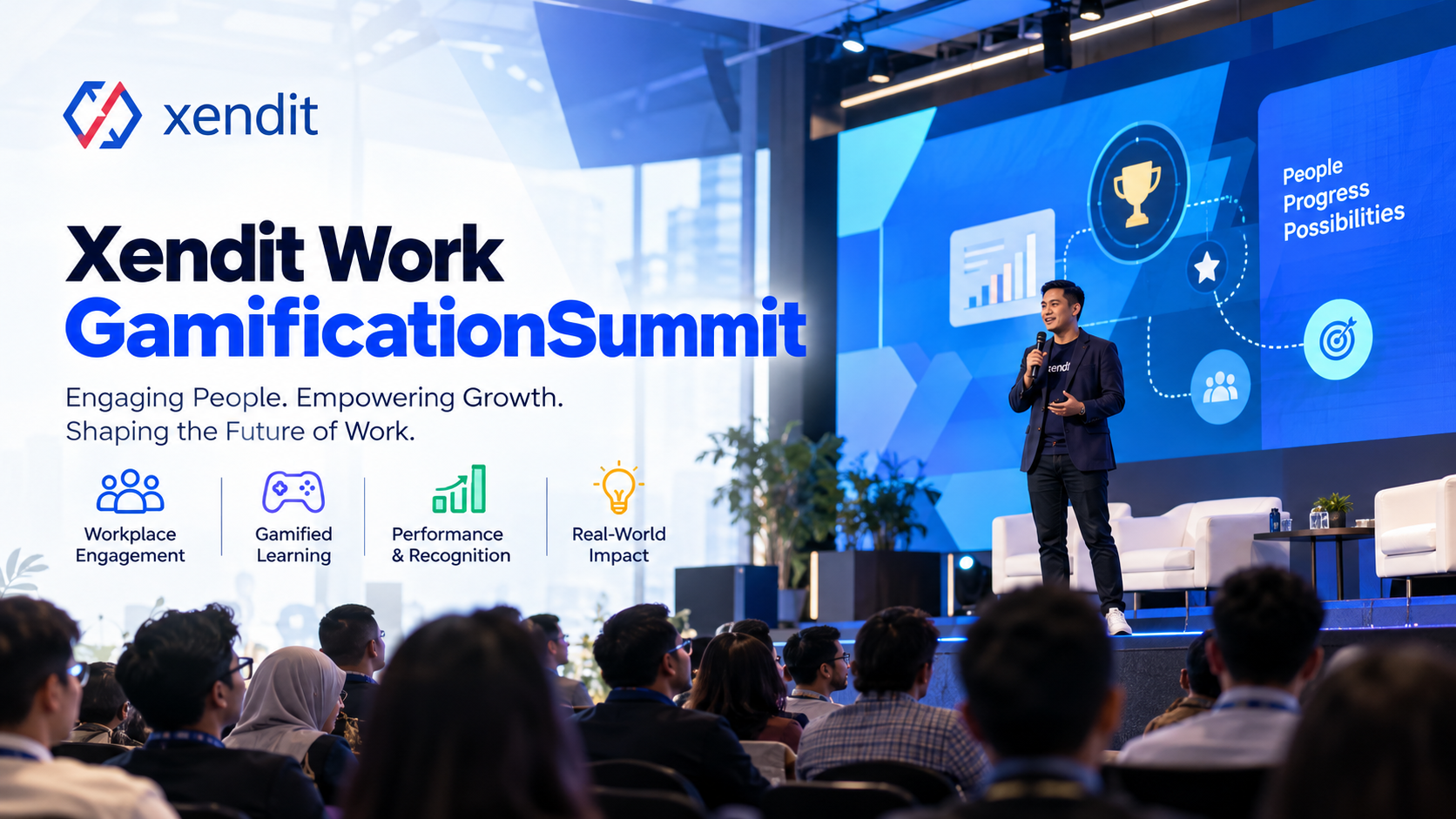
Xendit Work GamificationSummit is an online search term associated with Xendit, workplace gamification, employee engagement, and event technology. Although some websites describe it as a conference or employee development initiative, there is currently no clear official confirmation that Xendit operates a program with this exact name. The topic is best understood by examining Xendit’s verified payment services, the principles of workplace gamification, and how these technologies could work together to support engaging business experiences.
| Category | Details |
|---|---|
| Main topic | Xendit Work GamificationSummit |
| Associated company | Xendit |
| Industry | Financial technology and digital payments |
| Related concepts | Workplace gamification, employee motivation, digital rewards, and events |
| Official summit status | Not confirmed in publicly available Xendit documentation |
| Verified Xendit services | Payment acceptance, payment APIs, webhooks, and payouts |
| Official website | www.xendit.co |
| Relevant audience | Business leaders, HR professionals, product teams, developers, and event organizers |
What Is Xendit Work GamificationSummit?
The phrase Xendit Work GamificationSummit brings together three related but distinct ideas.
First, Xendit is a financial technology company providing digital payment infrastructure for businesses, particularly across Southeast Asia. Its services help organizations accept customer payments, automate financial transactions, and send money through supported channels.
Second, workplace gamification involves using elements commonly found in games to encourage participation, learning, and goal achievement. These elements can include points, badges, challenges, milestones, progress indicators, and recognition systems.
Third, a gamification summit generally refers to an event where professionals discuss how game-inspired design can influence motivation and behavior.
Combining these concepts suggests a relationship between payment technology, employee engagement, and gamified business experiences.
However, the term should not automatically be interpreted as the name of an officially established Xendit conference or product.
Is There an Official Xendit Gamification Summit?
Xendit maintains an official events platform featuring business discussions, startup events, webinars, and professional networking activities.
Its publicly listed events include topics involving entrepreneurship, financial technology, business development, and startup growth. A conference specifically named Xendit Work GamificationSummit is not identified in the available official listings.
Similarly, Xendit’s newsroom documents company announcements and developments without clearly establishing a summit under that name.
Some third-party articles provide detailed descriptions of a supposed summit, including workshops and workplace engagement activities. Those claims remain unverified without supporting announcements, event records, or documentation directly connected to Xendit.
The absence of an official listing does not prove that no private meeting or internal activity occurred. It simply means that the specific public event cannot currently be confirmed.
Understanding Xendit’s Role in Digital Payments
To understand the possible relationship between Xendit and gamification, it helps to examine the company’s actual services.
Xendit develops financial infrastructure that businesses can integrate into websites, applications, and operational systems.
According to its official product information, Xendit supports payment methods including bank transfers, cards, e-wallets, and QR-based payments, subject to regional availability.
Its technology is designed to help businesses manage financial transactions without building every payment connection independently.
Payment Processing and Automation
A business can use Xendit to accept payments for products, services, subscriptions, and other eligible commercial activities.
For example, an event organizer using a supported Xendit payment integration could allow participants to pay registration fees online.
After the payment is confirmed, the organizer’s own event-management platform could update the participant’s registration status.
This illustrates how financial infrastructure can support an event experience without being responsible for the event’s learning activities or engagement features.
Digital Payouts and Financial Rewards
Xendit also provides payout services that enable eligible businesses to send funds to supported recipients.
Its payout solutions include tools for managing reimbursements, refunds, and other payment transfers.
In a separately developed rewards platform, such infrastructure could potentially support monetary incentives.
For instance, a company might operate an employee recognition program in which qualifying participants receive approved financial rewards.
The recognition platform would determine eligibility and calculate rewards, while an integrated payment provider could handle the actual transfers.
Xendit provides payment infrastructure, not a documented standalone workplace gamification system.
How Workplace Gamification Works
Workplace gamification applies game-inspired design to professional activities without turning ordinary employment into a video game.
The main purpose is to make progress easier to understand, encourage constructive participation, and provide meaningful feedback.
A well-designed system connects incentives to useful outcomes rather than simply rewarding employees for collecting points.
Employee Learning and Development
Training programs are a practical setting for gamification.
A company might divide a complicated onboarding course into smaller modules, allowing participants to track completed lessons and receive recognition for demonstrated knowledge.
A typical system could include:
- Progress indicators showing completed training modules.
- Achievement badges for mastering specific skills.
- Optional team challenges that encourage collaboration.
- Feedback after assessments and practical exercises.
- Recognition for consistent learning and improvement.
These features make development goals more visible.
However, completing a course or earning a badge should not be confused with proving professional competence. Knowledge assessments and actual workplace performance remain important.
Collaboration and Team Recognition
Gamification can also encourage cooperation.
Rather than ranking employees solely by individual output, a company could recognize shared achievements such as resolving recurring customer problems or improving an internal process.
Team-based goals can help reduce excessive competition while making collective progress visible.
For technical organizations, recognition might focus on activities such as improving documentation, mentoring colleagues, identifying software defects, or sharing knowledge.
The central principle is to reward valuable contributions rather than activity for its own sake.
Customer and Product Engagement
Gamification is not limited to employees.
Digital businesses may use progress indicators, onboarding milestones, or achievement-based features to help customers understand their products.
For example, a business application might show new users how many essential setup steps they have completed.
Another application could recognize customers who finish educational tutorials or successfully configure important account features.
These examples illustrate general gamification approaches, not verified features of a particular Xendit initiative.
How Xendit Could Support a Gamified Business Event
A gamified summit combines event participation with structured activities that encourage attendees to engage with sessions, learning materials, and other participants.
Xendit’s documented capabilities could potentially support the financial side of such an event, while separate software manages participation and rewards.
Consider a hypothetical professional conference.
Step 1: Registration and Payment
Participants register through an event website.
If registration requires a fee, an integrated payment provider such as Xendit could process supported payment methods.
The event system would then associate a confirmed payment with the correct registration.
Step 2: Participant Activities
Once registered, attendees could access an event platform offering challenges such as attending sessions, completing quizzes, or participating in workshops.
Each activity would have clear completion rules.
A points system could recognize participation, while progress indicators could help attendees identify unfinished activities.
Step 3: Recognition and Rewards
Organizers could offer certificates, digital badges, or other forms of recognition.
Where monetary rewards are appropriate, a separate rewards system might use approved payout infrastructure.
Any transfer would require suitable account permissions, compliance checks, and eligibility rules.
Step 4: Measuring Event Outcomes
Organizers could examine attendance, session completion, learning assessments, and participant feedback.
These measurements would help determine whether the gamified activities improved the event experience.
Importantly, this is an illustrative implementation model, not a description of a verified Xendit GamificationSummit event.
What Research Says About Gamification at Work
The relationship between gamification and employee engagement has attracted academic attention.
A 2023 study published in Information & Management, titled Why to Gamify Performance Management?, examined responses from 268 employees in a human resources service organization.
The research found relationships between engagement with gamified performance management, employees’ perceptions of fairness, workplace attitudes, and job performance.
Another study, Game on: Can Gamification Enhance Productivity?, investigated workplace gamification using data from 400 respondents in Gulf-region organizations.
Its findings connected perceived usefulness, employee recognition, and motivation with work engagement and productivity-related outcomes.
However, these studies do not establish that every gamification program improves productivity. Their findings depend on the specific populations, research methods, and designs examined.
The broader lesson is that gamification can be useful when it supports meaningful motivation, but its effectiveness depends on implementation.
Challenges and Limitations of Workplace Gamification
Gamification introduces considerations that organizations should evaluate carefully.
Excessive Competition
Leaderboards can encourage participation, but they may also discourage employees whose responsibilities or opportunities differ.
For example, comparing employees only by the number of completed tasks can reward speed while overlooking complexity and quality.
Team goals, personal progress measures, and multiple forms of recognition can provide a more balanced approach.
Privacy and Employee Trust
Workplace gamification systems may collect information about employee activities, performance, and participation.
Organizations should clearly explain what information is collected, why it is needed, who can access it, and how long it will be retained.
Employees should not have to guess whether an engagement feature is also being used for undisclosed performance monitoring.
Reward Design
Financial incentives can encourage participation, but poorly designed rewards may shift attention away from the underlying work.
Employees might prioritize activities that generate points instead of activities that create meaningful business value.
Rewards should therefore reinforce appropriate behaviors while preserving fairness and professional judgment.
Technical Reliability
A platform combining payment processing and rewards must manage transaction events correctly.
Xendit’s official webhook documentation explains that payment notifications can sometimes be duplicated or delivered out of order.
Developers are advised to authenticate webhook messages and prevent duplicate processing.
For a reward system, those precautions are particularly important because processing the same event twice could result in an unintended duplicate reward.
Who Can Benefit From Understanding Xendit Work GamificationSummit?
Although the exact named summit remains unverified, the concepts associated with the term are relevant to several professional groups.
HR professionals can explore how recognition and structured learning activities may support employee development.
Product managers can consider how onboarding milestones and progress indicators improve the clarity of customer experiences.
Business leaders can examine whether gamification supports measurable organizational goals without encouraging unhealthy competition.
Developers and event organizers can explore how payment infrastructure, registration systems, and independently developed engagement platforms might be integrated.
The common opportunity is not simply adding points to existing processes. It is designing systems where feedback, participation, and measurable outcomes support one another.
Frequently Asked Questions
1. Is Xendit Work GamificationSummit an official Xendit event?
There is currently no clear confirmation in Xendit’s publicly available event listings or company announcements that an official event operates under this exact name. Online descriptions should be treated as unverified unless supported by reliable primary documentation.
2. Does Xendit offer a workplace gamification platform?
Xendit’s documented core services focus on digital payments, financial APIs, payment management, and payouts. Its official product information does not establish a standalone employee gamification platform called Xendit Work GamificationSummit.
3. Can Xendit be integrated into a gamified event or rewards system?
Potentially, yes. Eligible businesses may integrate supported Xendit payment and payout services with separately developed applications. Registration management, points, challenges, and reward eligibility would need to be handled by the surrounding system.
4. Where can someone verify information about a Xendit Gamification Summit?
The most reliable starting points are Xendit’s official website, events listings, and newsroom. Anyone considering registration or payment should verify the organizer, event details, and payment destination before sharing personal or financial information.
Conclusion
Xendit Work GamificationSummit is best understood as a search phrase connecting workplace gamification, business engagement, and Xendit’s financial technology, rather than a confirmed official conference or employee platform.
Xendit’s established payment and payout capabilities could support the financial operations of an independently developed gamified event or rewards system. Meanwhile, workplace gamification offers practical methods for structuring learning, recognizing contributions, and tracking progress.
The important distinction is between documented services and hypothetical applications. Understanding that difference allows businesses and readers to evaluate the topic accurately without relying on unsupported claims about a particular summit.
Read also Harmonicode Gaming: A Simple Guide to Its Meaning and Content